
Where Are Our Tribes on Water? The Question Cherokee Citizens Should Be Asking
- Cara Cowan Watts

- 17 hours ago
- 7 min read
By Cara Cowan Watts | Cherokee 411
The Choctaw Nation and Chickasaw Nation did something remarkable a decade ago. After years of litigation with the State of Oklahoma and the City of Oklahoma City over water in the Kiamichi Basin and Sardis Lake, they sat down at a table together — Tribes, State, and City — and built a settlement that protected southeastern Oklahoma's water for generations. That 2016 agreement covers a "Settlement Area" significantly larger than the Kiamichi watershed itself, spanning roughly 22 counties of historic Choctaw and Chickasaw treaty territory. The Tribes secured a seat at the table on every significant future water-rights proposal within that area. They locked in lake-level protections at Sardis based on Oklahoma Department of Wildlife Conservation recommendations. They preserved instream flows, drinking water, agriculture, and tourism — all at once.
Now Cherokee citizens should ask a hard question: where are the Cherokee Nation, the United Keetoowah Band, and the Muscogee (Creek) Nation on the same kind of protection for the Arkansas River watershed?
This is not an idle question. It is an urgent one.
What's coming to our water
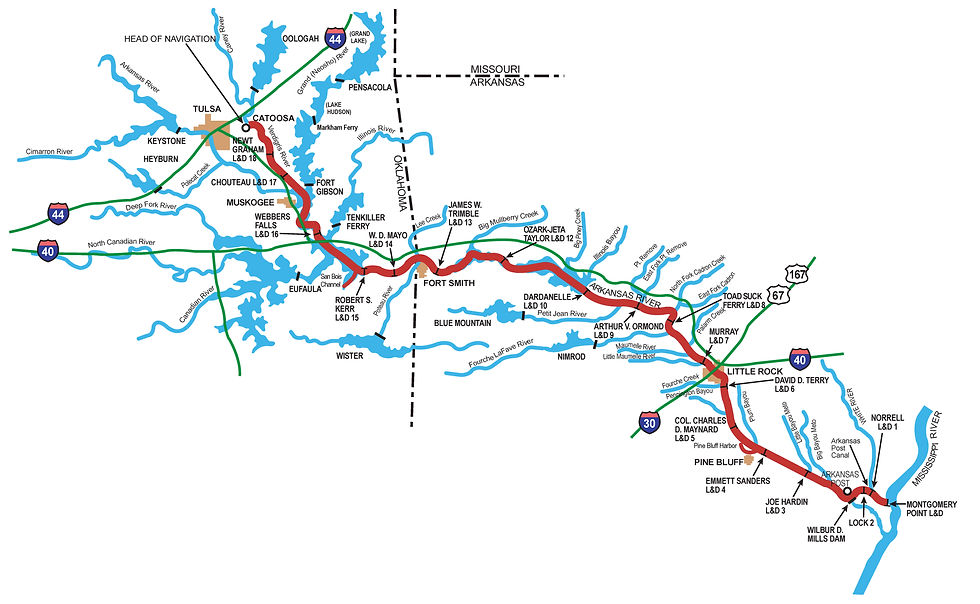
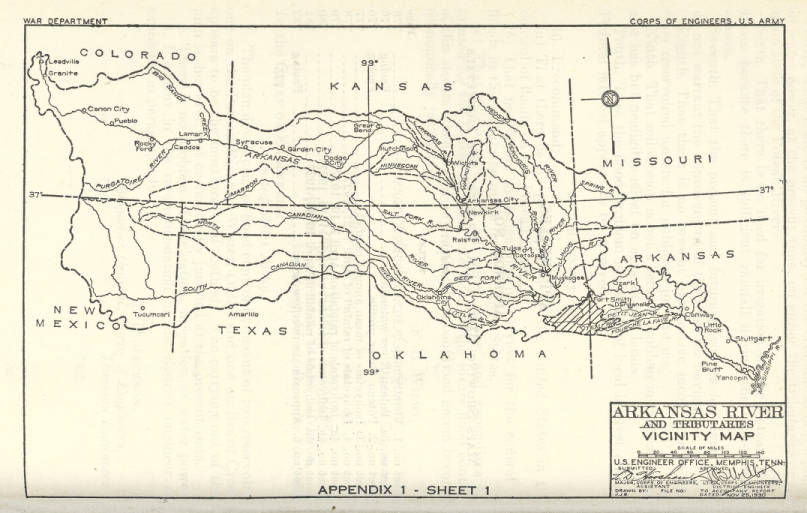
The proposed Oklahoma Primary Aluminum smelter sits at the Port of Inola, inside the Muscogee (Creek) Nation reservation — but roughly three miles from the Cherokee Nation and UKB border and less than ten miles from Cherokee Nation's flagship Hard Rock Hotel & Casino in Catoosa. The plant is sited on the Verdigris River, which flows into the Arkansas River at Three Forks near Muskogee. The Verdigris, the Arkansas, and the Grand all converge in the same basin our three Tribes have shared interests in for generations — and have jointly administered through the Arkansas Riverbed Authority since the 1970 U.S. Supreme Court ruling in Choctaw Nation v. Oklahoma.
The smelter is a $4 billion joint venture: 60 percent owned by Emirates Global Aluminium, an Emirati company owned by Mubadala Investment Company of Abu Dhabi and the Investment Corporation of Dubai, and 40 percent owned by Chicago-based Century Aluminum. The joint venture announced in January 2026 calls for a plant producing 750,000 tonnes of aluminum annually — more than doubling current U.S. primary aluminum production. It will be the first new primary aluminum smelter built in the United States in nearly fifty years. Construction is targeted to begin by the end of 2026.
Aluminum smelting is one of the most energy-intensive and water-intensive industrial processes on earth. Data centers continue to expand across northeast Oklahoma, each one drawing millions of gallons for cooling. And these projects are landing in a region that has now entered its sixth consecutive year of drought. As of late February 2026, more than 91 percent of Oklahoma was in drought, with severe and extreme conditions expanding across the south and east. The National Interagency Fire Center is forecasting above-normal wildfire potential for the entire state by spring.
At the April 2026 Oklahoma Department of Environmental Quality hearing in Inola, DEQ officials told concerned residents that water and waste were "not in front of us today" — only air-quality permits were under review. That fragmented, agency-by-agency, permit-by-permit process is exactly what lets a project of this magnitude move forward without anyone answering the central questions: Does this area have adequate power, wastewater treatment, and water quantity to support a smelter of this size? What protections are in place for water quality? For the surrounding environment? For the families who live in this watershed?
These questions remain unanswered.
The contrast across the county line
In March 2026, the Tulsa City Council voted unanimously to impose a moratorium on new data center construction through the end of the year, giving the city time to study water, power, and zoning impacts before approving more projects. Mayor Monroe Nichols has publicly said that Tulsa is "relatively water rich" and that his administration wants to "stay that way," citing the environmental challenges data centers present and signaling Tulsa will be "highly selective" about which projects it accepts.
That is exactly the kind of thoughtful pause communities are entitled to when faced with industrial users of this scale.
Meanwhile, just across the county line, the City of Tulsa–Rogers County Port Authority — the very same body that operates the Tulsa Port of Catoosa, with board members appointed directly by the Mayor of Tulsa and the Rogers County Commissioners — brought the Inola smelter to a rural community with fewer resources, less political voice, and a far smaller staff to vet the project's water and environmental impacts. The Port of Inola sits in Rogers County, outside Tulsa city limits, so the City Council's moratorium does not apply there. But the Mayor of Tulsa has appointees on the very board that brought this smelter to Inola. The economic benefits the project promotes — jobs, construction contracts, supply chains — are likely to flow disproportionately to Tulsa-area workers and businesses. The water draw, the wastewater discharge, the air emissions, and the long-term environmental risks land on Inola's farmers, ranchers, and families — and on the Arkansas River watershed shared by Muscogee (Creek) Nation, Cherokee Nation, and UKB.
That is not balanced economic development. That is one jurisdiction studying carefully for what happens within its own city limits while its appointees route the consequences to its rural neighbors.
What the Choctaw and Chickasaw secured, and what the rest of us have not
The Choctaw–Chickasaw–State–OKC settlement did not just resolve a single lawsuit. It built a permanent framework. Folks online analyzing the settlement language have pointed out that its "Settlement Area Waters" provisions reach beyond the Kiamichi River channel itself, covering tributaries, connected aquifers, reservoir systems, and transfer projects. Any proposal that would significantly affect basin hydrology, Sardis storage, streamflow protections, or out-of-basin transfers triggers settlement review. That is real, structural power — exercised in advance, not after the damage is done.
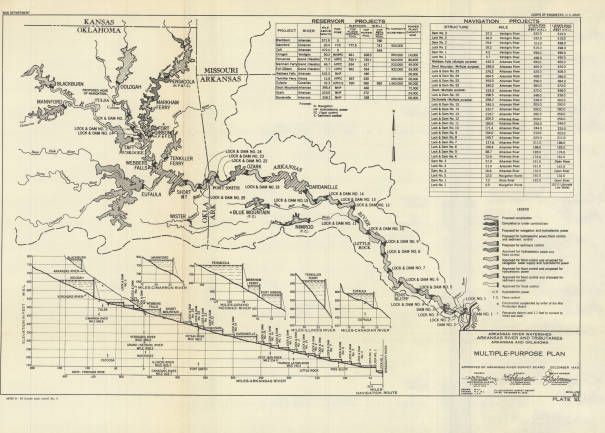
Cherokee Nation, UKB, and Muscogee (Creek) Nation are not starting from nothing on water. Through the Arkansas Riverbed Authority, the Cherokee, Choctaw, and Chickasaw Nations have jointly administered the tribally owned reach of the Arkansas River between Muskogee and Fort Smith since 1970, and the 2002 Arkansas Riverbed Final Act expressly preserved any right, title, or interest each Nation may have in and to the water flowing in the Arkansas River and its tributaries. The Muscogee (Creek) Nation likewise holds interests along the Arkansas. That preservation is a foundation. It is not a settlement, and it does not give our Nations the same enforceable seat at the table that Choctaw and Chickasaw secured for their treaty territory in 2016.
So far, none of the three Nations whose people live in the immediate footprint of the Inola smelter — Muscogee (Creek), Cherokee Nation, and UKB — have publicly announced a comprehensive water-rights settlement process with the State, with affected municipalities, or with the federal government covering the Arkansas River watershed. If those discussions are happening, they are not happening in public view. And the smelter is not going to wait.
This is not opposition to economic development
Let us be clear about something. None of us are against economic development. None of us are against opportunity. None of us want to shut down jobs, growth, or investment in Oklahoma.
What we want is transparency and thoughtfulness.
Planning is what gets communities through severe droughts. Planning is what protects the people downstream when a 750,000-tonne aluminum smelter starts drawing water from the Verdigris. Planning is what prevents the kind of expensive cleanup that always — always — comes after contamination goes unaddressed.
Approving a project of this magnitude without answering basic questions about water quantity, wastewater treatment, power capacity, and environmental protection is not economic development. It is recklessness dressed up as opportunity. The economic development is what happens after those questions are answered honestly — not before.
What citizens should be asking
If you are a citizen of Cherokee Nation, UKB, or Muscogee (Creek) Nation, your Tribes are sovereign governments with the standing, the legal history, and the moral authority to demand a seat at the table on every major water decision affecting our shared watershed. Choctaw and Chickasaw leadership demonstrated this kind of agreement is achievable. It took five years of negotiation, the best hydrologists and modelers the parties could assemble, and a willingness to litigate when negotiation stalled. It is hard work. It is also exactly the work that protects rural communities, family farms and ranches, small businesses, and the streams and lakes our families have fished for generations.
Here is what citizens can do, starting now:
Contact your Principal Chief and your Tribal Council representatives directly. Ask them: Are you protecting our waters? What is our Nation's position on the water requirements of the Inola smelter? Have we been formally consulted by the State, by the developers, or by the Port of Inola? What is our position on the cumulative water draw of data centers and other large industrial users in the Arkansas River watershed? Are we pursuing a comprehensive water-rights settlement on the model of the Choctaw–Chickasaw agreement? If not, why not?
Attend Oklahoma Department of Environmental Quality and Oklahoma Water Resources Board public meetings on any project affecting water in our reservations. The April Inola meeting showed that without public pressure, water questions get tabled to a later hearing that may never meaningfully arrive.
Ask hard questions of the Mayor of Tulsa, the Rogers County Commissioners, and the City of Tulsa–Rogers County Port Authority board about why this project landed where it did, what due diligence was done on water quantity and quality, and who is going to pay the cleanup bill if something goes wrong.
Demand that any major industrial siting decision in the Arkansas River watershed within reservation boundaries — smelter, data center, refinery, anything drawing significant water — be subject to formal government-to-government consultation with the affected Tribes before state permits are issued, not after.
The clock is the drought
Water settlements are not built quickly. The Choctaw–Chickasaw agreement took five years of negotiation before it was signed in 2016, and required additional federal legislation to take full effect. If our Nations begin the work today, the framework will not be in place for years. The Inola smelter is targeting groundbreaking by the end of 2026. Data center expansion is happening now. The drought is in its sixth year.
The Choctaw and Chickasaw Nations did not wait until their water was gone to act. They negotiated from a position of legal strength while there was still water in dispute. Cherokee Nation, UKB, and Muscogee (Creek) Nation citizens have every right to expect the same foresight from our own leadership — and the responsibility to demand it. So do Oklahomans and neighboring States such as Arkansas, which is downstream.
Sovereignty is not just a legal status. It is something you exercise, or something you lose.
Cara Cowan Watts is a Cherokee Nation citizen and contributor to Cherokee411.com.


Comments